The Song of Sparrows in a Hundred Days of Summer began in 2013 when Hura started photographing the summer in Savariyapani, a small village panchayat secluded amongst the barren landscape at Barwani in the central state of Madhya Pradesh in India. The body of work also has connections with Hura’s earlier works, Land of a Thousand Struggles (2005–06) and video work Pati (2010/2020 Iteration). With beginnings rooted strongly in the documentary, Land of a Thousand Struggles and Pati are records that Hura made immediately after finishing his university studies when he embarked on a fifty-day long bus journey across the north Indian rural belt with his university professor Jean Dreze and others from civil society who were part of the Right to Food movement. The journey was a final push to demand for the enactment of the National Rural Employment Guarantee Act (NREGA), which eventually became the biggest social security measure undertaken by any government anywhere at the time, with a focus to provide the right to employment with dignity. It was also this journey that took him to Pati—a small cluster of village panchayats in Madhya Pradesh (central India) where Hura would continue to return and work for the next fifteen owing to the relationships first forged with The Jagrut Adivasi Dalit Sangathan (JADS), a unionised people’s movement during the visit on the long road trip.
In The Song of Sparrows in a Hundred Days of Summer, which brings alive the contours of a parched region with little rainfall and extreme temperatures, Hura transcends beyond just depicting the chokehold of heat. The photographs evoke the murmurs of an ephemeral state, seeking to capture the pulse of a place and its lived realities—often overlooked, and lost amid the swirls of a dust storm or the languor of an afternoon.
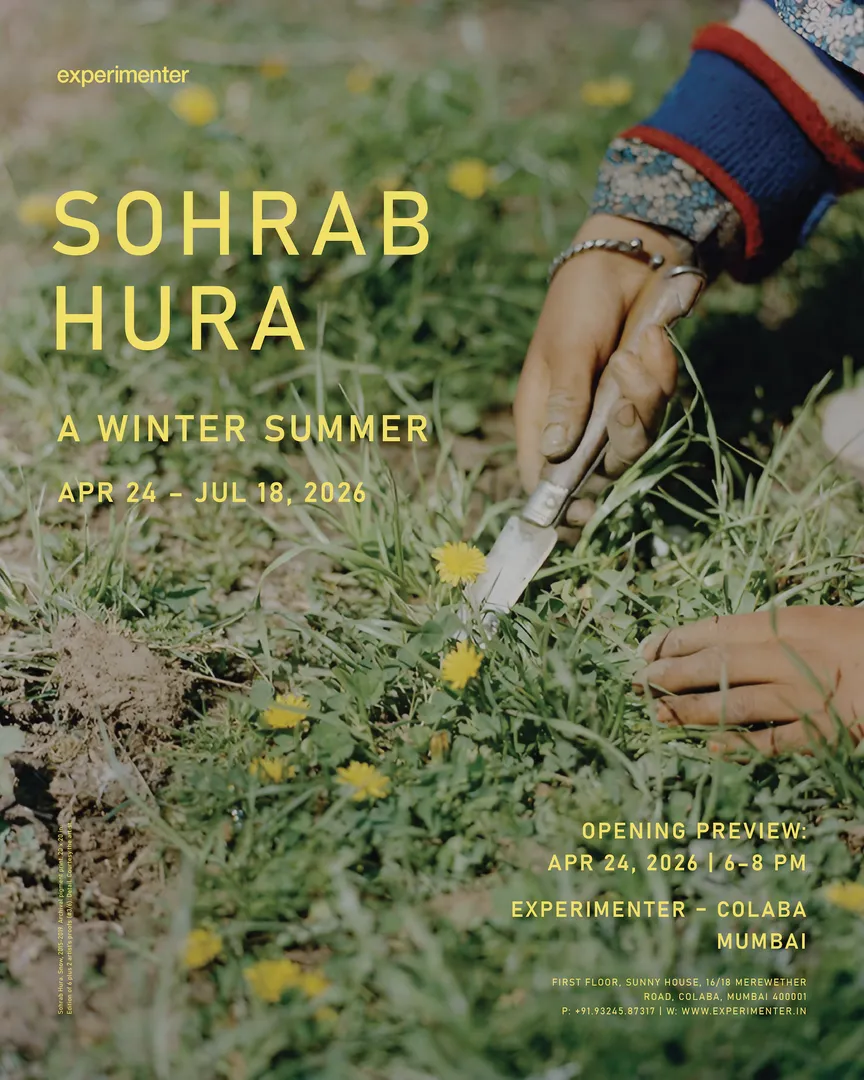
Through these bodies of work—emerging from different seasons, places, and moments—A Winter Summer examines the contrasts and connections that both divide and unite them, while revealing the layers of contradiction, deceit, and hierarchy often buried within the familiar subconscious.
Sohrab Hura (b. 1981) lives and works in New Delhi, India.
